
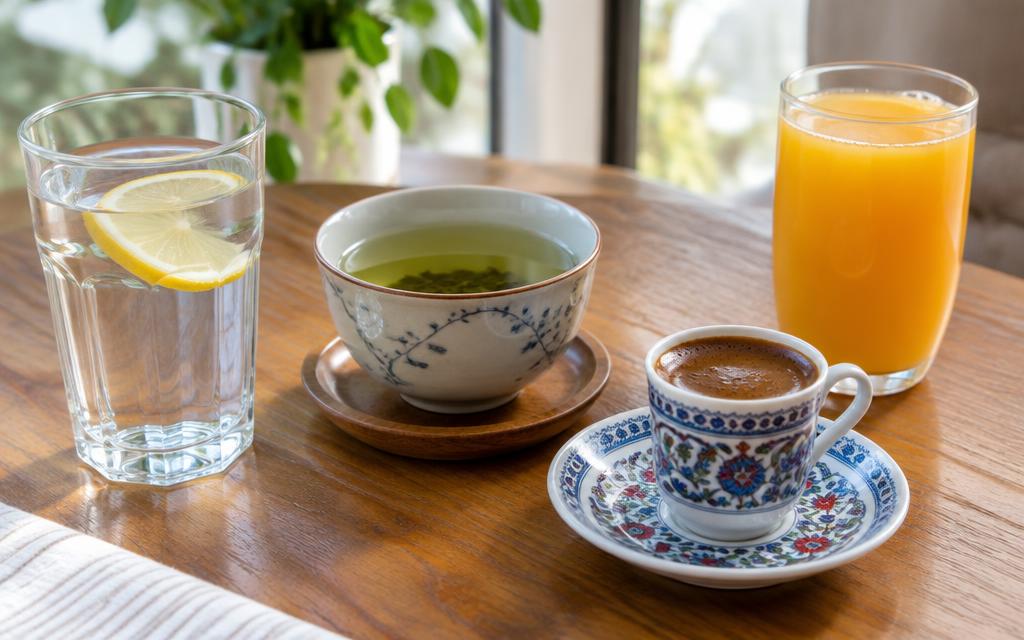
Arabic coffee (gahwa)
Also known as: qahwa
Generally a good everyday choice in sensible portions.
Unsweetened gahwa is fine — the dates and sweets alongside are what count.
Portion guide
2–3 small cups (about 30 g)
Educational guidance only — not a personal diet prescription. Content is medically reviewed and based on recognised clinical guidelines — see references. If you have feedback or a suggestion to improve this website, .
Nutrition per 2–3 small cups
| Calories | 2 kcal |
|---|---|
| Total carbohydrates | 0 g |
| Protein | 0 g |
| Fat | 0 g |
| Fibre | 0 g |
| Sugars | 0 g |
No reliable GI value published for this food.
Better ways to cook it
- Choose water or unsweetened drinks first
Practical advice
- A good everyday choice in sensible portions
Detailed clinical explanation
Low glycaemic impact at the stated portion because of fibre, protein or low carbohydrate content.
Scientific references
- Estimated from a standard home recipe using USDA FoodData Central ingredient values; to be verified.
- American Diabetes Association. Standards of Care in Diabetes — Facilitating Positive Health Behaviors (nutrition therapy).
Last medically reviewed: 3 November 2026
Related foods
Black coffee
kahwa (black), kape
Unsweetened coffee is fine for most people.
Portion: 1 cup (about 240 g)
Calamansi water (no sugar)
calamansi juice
Refreshing without sugar — skip the syrup.
Portion: 1 glass (about 250 g)
Green tea
sabz chai, shai akhdar
Unsweetened tea is a good everyday drink.
Portion: 1 cup (about 240 g)
Educational information only — your own targets depend on your medicines and health. Compare with another food