
7 July 2026 · 6 min read
Types of Exercises in Diabetes
A Complete Guide for Better Blood Sugar Control
By Dr. Suhail M. Marfani, Specialist Internal Medicine & Diabetes Expert, Sharjah, UAE. Visit: https://www.primehealth.ae/prime-medical-center/doctor-profile/al-qasimia/dr-suhail-muhammad-marfani
Regular physical activity is one of the most effective non-pharmacological interventions for preventing and managing diabetes. Exercise improves insulin sensitivity, helps control blood glucose levels, supports weight management, reduces cardiovascular risk, and enhances overall well-being.
Once discussed with your personal doctor, both aerobic and Resistance exercises are beneficial for improving glucose control, decreasing insulin resistance, and maintaining body weight, and should be done regularly.
As a Specialist Internal Medicine Doctor and Diabetes Expert at Prime Medical Center, Al Qasimia Branch, Sharjah, UAE, I regularly advise patients that combining appropriate exercise with healthy nutrition can significantly improve diabetes control and reduce long-term complications.
For personalized diabetes management, lifestyle counseling, and exercise guidance, consultation is available at Prime Medical Center, Al Qasimia Branch, Sharjah.
Why Exercise Is Important in Diabetes
Regular exercise offers several health benefits for individuals with diabetes:
- Improves insulin sensitivity and reduces insulin resistance. [1]
- Helps lower HbA1c levels by approximately 0.5–0.7%. [2]
- Assists in weight reduction and maintenance. [3]
- Lowers blood pressure and cardiovascular risk. [4]
- Improves muscle strength, flexibility, and mental health. [5]
According to the American Diabetes Association, adults with diabetes should aim for at least 150 minutes of moderate-intensity aerobic activity per week, along with resistance exercise 2–3 times per week. [1]
Types of Exercises Recommended for People with Diabetes
The following infographic summarizes the major categories of exercise beneficial in diabetes.
Related Article: https://share.google/i8PDKWo3S2LvnAe0C
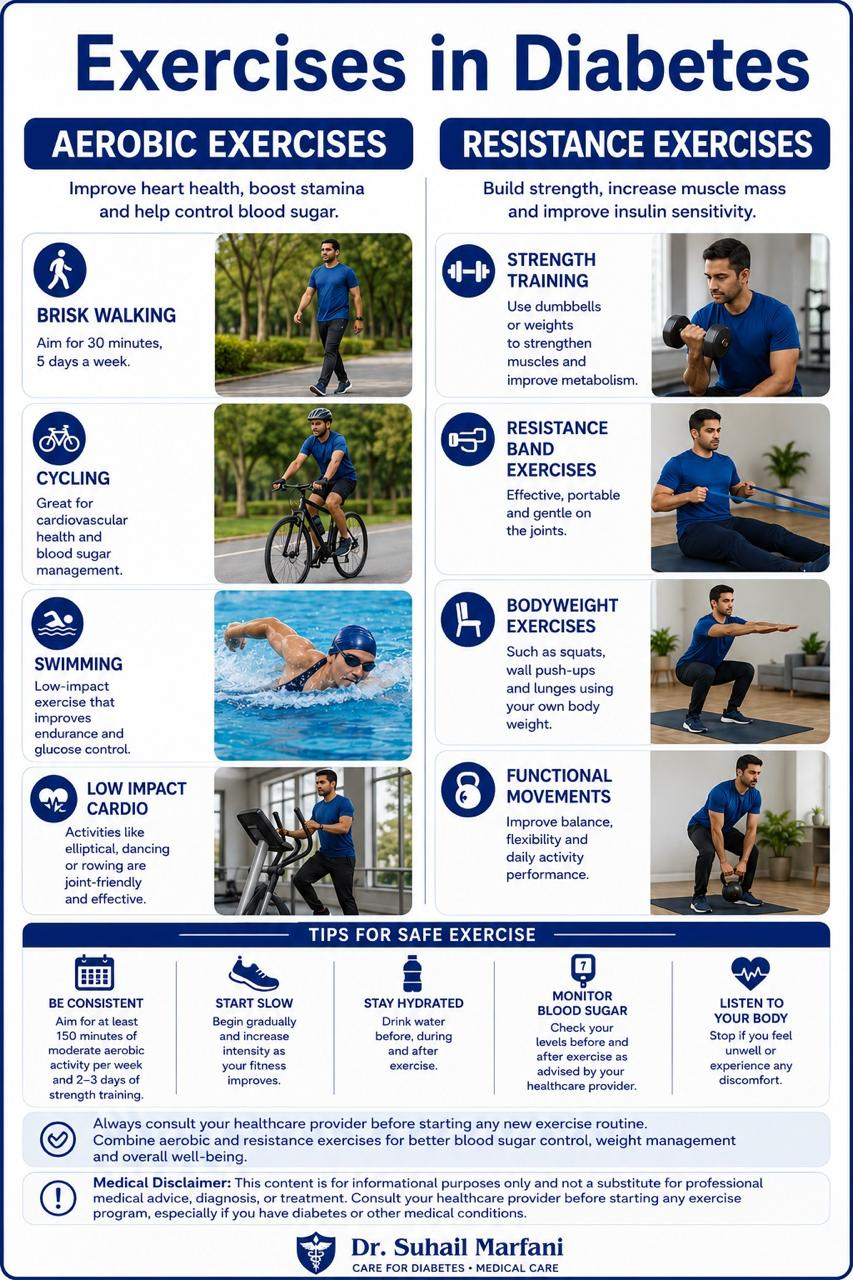
1. Aerobic Exercises
Aerobic exercises increase heart rate and improve cardiovascular fitness while helping lower blood glucose levels.
Brisk Walking
Brisk walking is one of the safest and easiest exercises for most people with diabetes.
Benefits
- Improves insulin sensitivity. [1]
- Helps reduce blood glucose levels. [2]
- Supports weight management. [3]
- Improves cardiovascular health. [4]
Recommendation
Aim for 30 minutes of brisk walking at least 5 days per week. [1]
Cycling
Cycling is excellent for cardiovascular fitness and is gentle on joints.
Benefits
- Improves heart health. [4]
- Enhances glucose utilization by muscles. [2]
- Supports weight loss efforts. [3]
Swimming
Swimming is particularly beneficial for individuals with obesity, arthritis, or joint pain.
Benefits
- Provides a full-body workout. [5]
- Improves endurance and cardiovascular fitness. [4]
- Minimizes stress on joints. [5]
Low-Impact Cardio
Examples include:
- Elliptical training
- Rowing
- Dancing
- Water aerobics
Benefits
- Suitable for people with joint problems. [5]
- Improves blood glucose control. [2]
2. Resistance Exercises
Resistance training increases muscle mass, which enhances glucose uptake and insulin sensitivity.
The American Diabetes Association recommends resistance exercise 2–3 sessions per week. [1]
Strength Training
Examples:
- Dumbbells
- Weight machines
- Free weights
Benefits
- Builds muscle mass. [1]
- Improves metabolism. [2]
- Increases insulin sensitivity. [2]
Resistance Band Exercises
Resistance bands offer a portable, joint-friendly form of exercise.
Benefits
- Improves strength and flexibility. [5]
- Suitable for beginners and older adults. [5]
Bodyweight Exercises
Examples include:
- Squats
- Wall push-ups
- Lunges
- Step-ups
Benefits
- Require no equipment. [5]
- Improve muscle strength and balance. [5]
Functional Movements
Examples:
- Sit-to-stand exercises
- Carrying groceries
- Stair climbing
Benefits
- Improves daily functional capacity. [5]
- Enhances balance and mobility. [5]
Exercise Safety Tips for People with Diabetes
Be Consistent
Consistency is more important than intensity. Aim for regular physical activity throughout the week. [1]
Start Slowly
If you are new to exercise, begin gradually and increase intensity over time. [5]
Stay Hydrated
Drink adequate water before, during, and after exercise. [5]
Monitor Blood Glucose
People taking insulin or certain diabetes medications should monitor blood sugar before and after exercise to prevent hypoglycemia. [1]
Listen to Your Body
Stop exercising and seek medical advice if you experience:
- Chest pain
- Severe shortness of breath
- Dizziness
- Palpitations
- Severe hypoglycemia symptoms [1,5]
Combining Exercise with Healthy Nutrition
Exercise works best when combined with healthy eating habits.
Read our previous article:
Food and Diabetes:
https://www.carefordiabetes.ae/food-and-diabetes/
A balanced diet, along with regular physical activity, can significantly improve blood glucose control and reduce the risk of diabetes complications.
When Should You Consult a Doctor Before Starting Exercise?
You should consult your healthcare provider before beginning a new exercise program if you have:
- Long-standing diabetes
- Heart disease
- Uncontrolled hypertension
- Severe neuropathy
- Retinopathy
- Kidney disease
- History of hypoglycemia
Individuals with diabetes should have an individualized exercise plan based on their health status. [1]
Conclusion:
Exercise is a cornerstone of diabetes prevention and management. A combination of aerobic and resistance exercises provides the greatest benefits for blood glucose control, weight management, cardiovascular health, and overall well-being.
Even modest increases in physical activity can lead to significant improvements in health. Start gradually, remain consistent, and make exercise a regular part of your lifestyle.
Frequently Asked Questions (FAQs) About Types of Exercises in Diabetes
1. Can exercise lower blood sugar levels?
Yes. Regular exercise helps muscles use glucose more efficiently, improves insulin sensitivity, and can lower blood sugar levels. [1,2]
2. What is the best exercise for people with diabetes?
A combination of aerobic exercises (such as brisk walking, cycling, or swimming) and resistance training (such as weight training or resistance bands) provides the greatest benefit for blood sugar control. [1]
3. How much exercise should a person with diabetes do?
The American Diabetes Association recommends at least 150 minutes of moderate-intensity aerobic exercise per week, along with resistance exercises on 2–3 days per week. [1]
4. Should I check my blood sugar before exercising?
Yes, especially if you take insulin or medications that may cause hypoglycemia. Monitoring blood glucose before and after exercise helps prevent both low and high blood sugar episodes. [1]
5. Is walking good for diabetes?
Absolutely. Brisk walking is one of the safest and most effective forms of exercise for people with diabetes. Walking for 30 minutes on most days of the week can improve blood sugar control and overall health. [1,2]
More to Read:
https://drsuhailmarfani.com/2026/06/28/food-and-diabetes/
References
1. American Diabetes Association Professional Practice Committee. Standards of Care in Diabetes—2026. Diabetes Care. 2026;49(Suppl 1):S1-S350.
2. Colberg SR, Sigal RJ, Yardley JE, et al. Physical Activity/Exercise and Diabetes: A Position Statement of the American Diabetes Association. Diabetes Care. 2016;39(11):2065-2079.
3. Umpierre D, Ribeiro PAB, Kramer CK, et al. Physical Activity Advice Only or Structured Exercise Training and Association With HbA1c Levels in Type 2 Diabetes. JAMA. 2011;305(17):1790-1799.
4. World Health Organization. WHO Guidelines on Physical Activity and Sedentary Behaviour. Geneva: WHO; 2020.
5. American College of Sports Medicine. ACSM’s Guidelines for Exercise Testing and Prescription. 11th Edition. Wolters Kluwer; 2021.
Medical disclaimer: This article is for general education only and does not replace personal medical advice. Always consult a qualified clinician about your own health.

Written by Dr. Suhail M. Marfani, Health and Diabetes Physician. Educational information only — discuss your own care with your doctor.