
Fatty Liver
(NAFLD or MASLD)
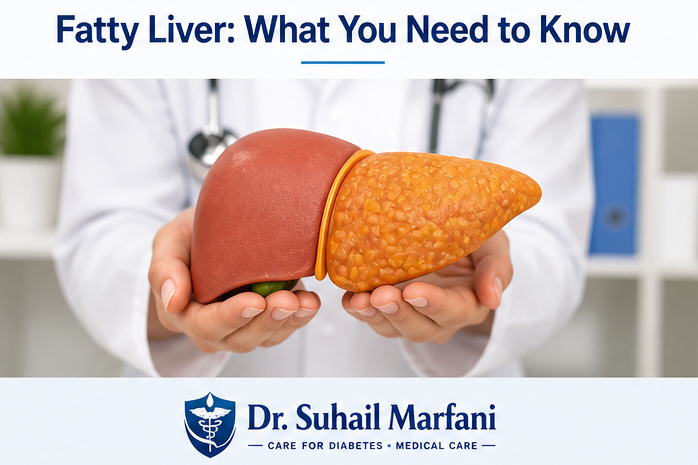
Fatty liver is a condition in which excess fat accumulates in liver cells, typically when fat constitutes more than 5% of liver weight. It is common and often asymptomatic in early stages but may progress to inflammation, fibrosis, and cirrhosis if untreated.
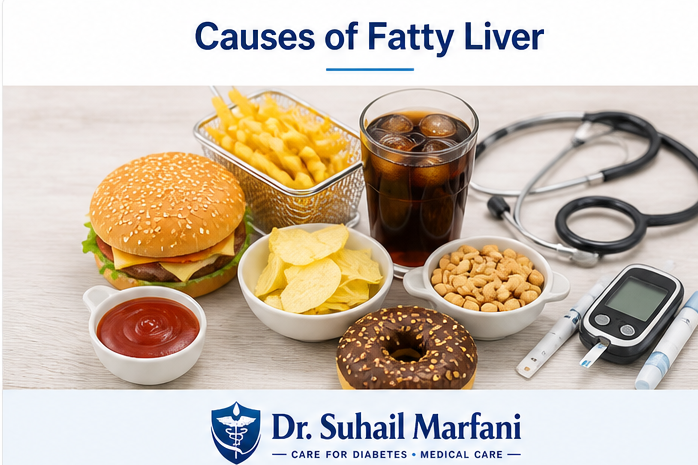
Causes
- Obesity and overweight
- Type 2 diabetes mellitus and insulin resistance
- Dyslipidemia (high triglycerides and cholesterol)
- Excess alcohol consumption
- Sedentary lifestyle and unhealthy diet
- Certain medications (e.g., steroids, amiodarone)
- Genetic predisposition
Types
- Non-Alcoholic Fatty Liver Disease (NAFLD): Occurs in individuals with little or no alcohol intake; commonly associated with metabolic syndrome
- Alcoholic Fatty Liver Disease (AFLD): Caused by chronic alcohol consumption
Clinical Features
- Often asymptomatic in early stages
- Fatigue and general weakness
- Mild discomfort or heaviness in the right upper abdomen
- Hepatomegaly (enlarged liver)
- In advanced disease: jaundice, edema, ascites
Laboratory Findings
- Mild elevation of liver enzymes (ALT, AST)
- Elevated triglycerides and cholesterol
- Increased fasting glucose or HbA1c
- Additional tests to exclude viral or autoimmune liver disease
Investigations
- Ultrasound abdomen: First-line, detects fatty infiltration
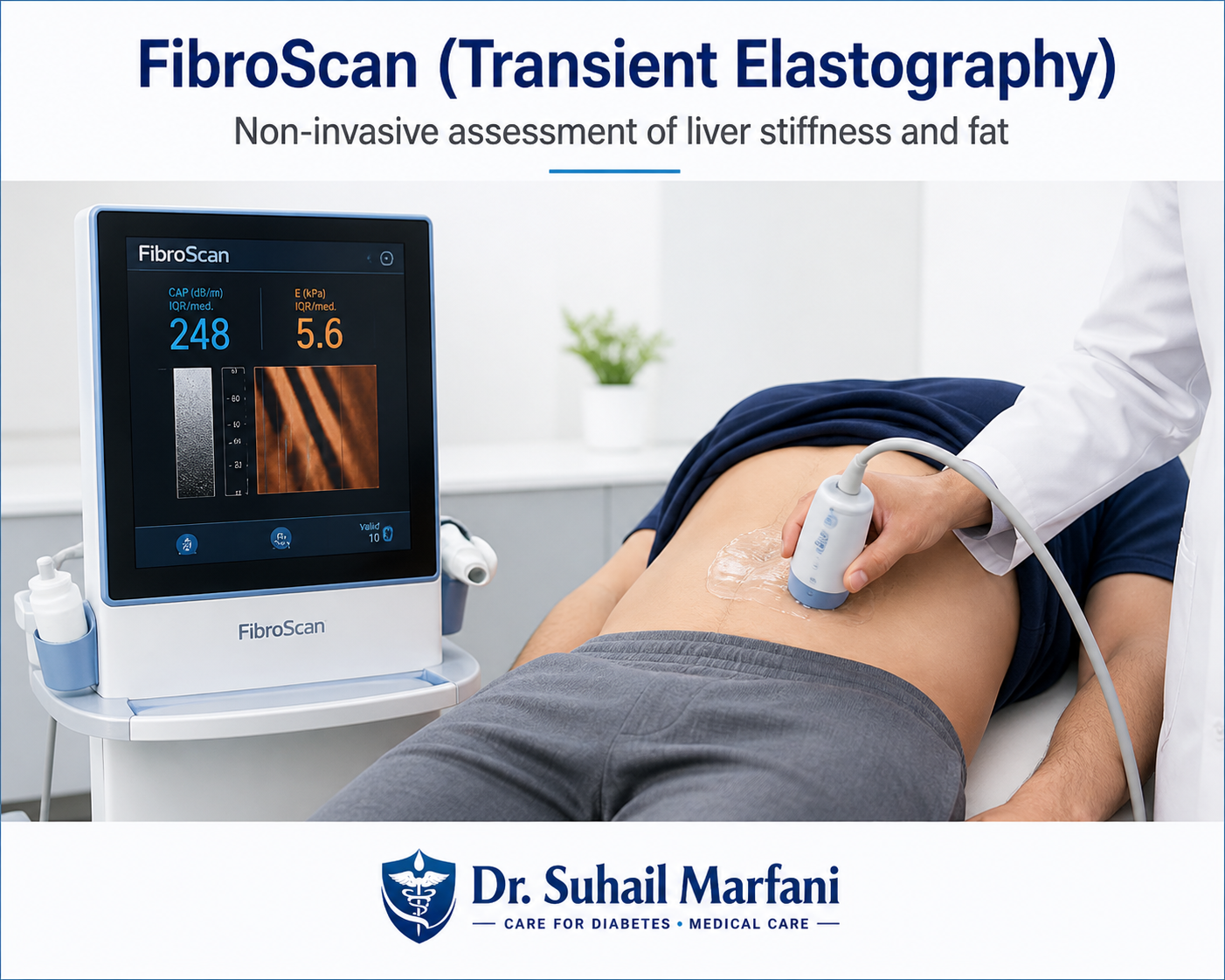
- FibroScan (Transient Elastography): Assesses liver stiffness and fibrosis
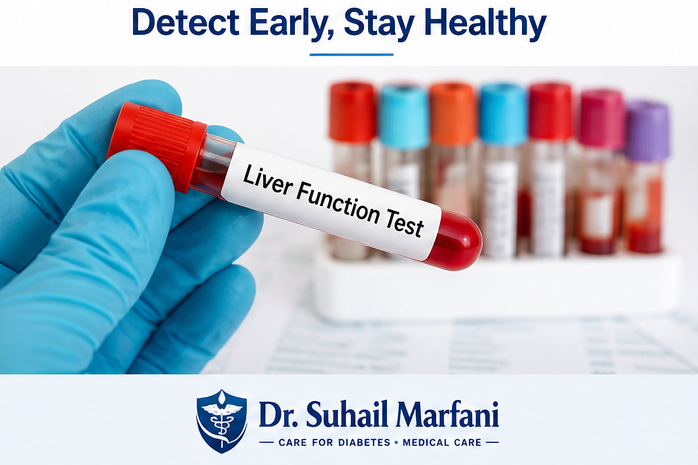
- Blood tests: Liver function tests, lipid profile, glucose, HbA1c
- MRI-PDFF: Quantifies liver fat in selected cases
- Liver biopsy: Gold standard (rarely required)
Management
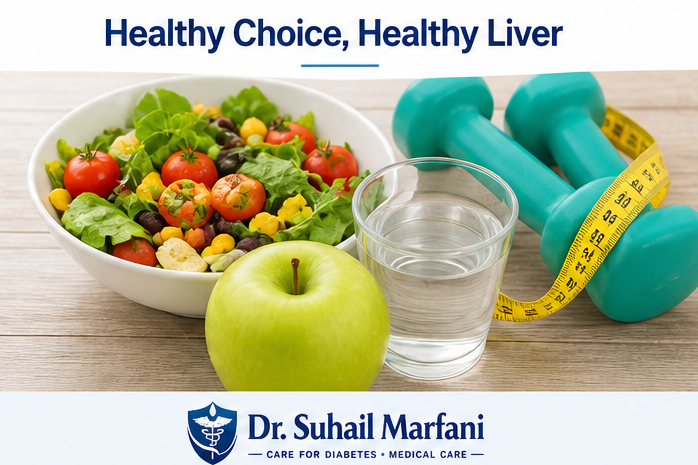
- Weight reduction through diet and regular exercise
- Control of diabetes, hypertension, and dyslipidemia
- Avoidance of alcohol and hepatotoxic drugs
- Balanced diet rich in fruits, vegetables, whole grains, and lean protein
- Regular monitoring and follow-up
- Pharmacological therapy in selected patients under medical supervision
Summary
Fatty liver is a largely preventable and reversible condition when identified early. Lifestyle modification remains the cornerstone of management, with regular medical follow-up to prevent progression to advanced liver disease.
Grades of Fatty Liver
Fatty liver is commonly graded based on the amount of fat accumulation seen on imaging (usually ultrasound):
Grade 1 (Mild)
- Slight increase in liver fat
- Usually asymptomatic
- Liver function is typically normal
- Fully reversible with lifestyle changes
Grade 2 (Moderate)
- Moderate fat accumulation in the liver
- May have mild symptoms like fatigue or abdominal discomfort
- Liver enzymes may be mildly elevated
- Requires active lifestyle and metabolic control
Grade 3 (Severe)
- Marked fat accumulation with possible inflammation
- Higher risk of fibrosis and progression to cirrhosis
- May present with more noticeable symptoms
- Needs strict medical follow-up and management
Key Point
Early-stage fatty liver (Grades 1 and 2) is often reversible with proper diet, exercise, and control of diabetes and cholesterol. Early detection is essential to prevent progression.
**Looking For: Fatty Liver Doctor in Sharjah, Specialist doctor in Sharjah, Fatty Liver treatment in Sharjah, Internal Medicine Specialist Doctor in Sharjah, Doctor in Sharjah.
For High Cholesterol info, visit:https://drsuhailmarfani.com/high-cholesterol/
Frequently Asked Questions About Fatty Liver Disease
- What is fatty liver disease?
Fatty liver disease occurs when excess fat accumulates in the liver.
- What causes fatty liver?
Common causes include obesity, diabetes, high cholesterol, insulin resistance, and excessive alcohol consumption.
- What are the symptoms of fatty liver?
Many people have no symptoms. Some may experience fatigue or discomfort in the upper right abdomen.
- Can fatty liver be reversed?
Yes. Weight loss, healthy eating, exercise, and controlling diabetes can often improve or reverse fatty liver.
- Is fatty liver serious?
If left untreated, fatty liver can progress to liver inflammation, fibrosis, cirrhosis, and liver failure.
Delivering evidence-based care and trusted medical education, with a focus on diabetes, chronic disease management, and preventive health. Simplifying complex medical information to empower informed patient decisions.
Menu
Contact Us
Email: support@drsuhailmarfani.com
Call 04 707 0999
Prime Medical Center – Al Qasimia
King Abdul Aziz Street, Al Nad, Sharjah, UAE