
High Uric Acid & Diet Plan
High uric acid (hyperuricemia) is a condition in which there is an excess level of uric acid in the blood. Uric acid is a waste product formed from the breakdown of purines found in certain foods and body tissues. High levels can lead to joint problems and kidney issues.
Types of High Uric Acid
- Primary (Lifestyle-related): Due to diet, reduced excretion, or genetic factors
- Secondary Hyperuricemia: Caused by medical conditions (kidney disease, metabolic disorders) or certain medications
Clinical Features
Many people have no symptoms. When present:
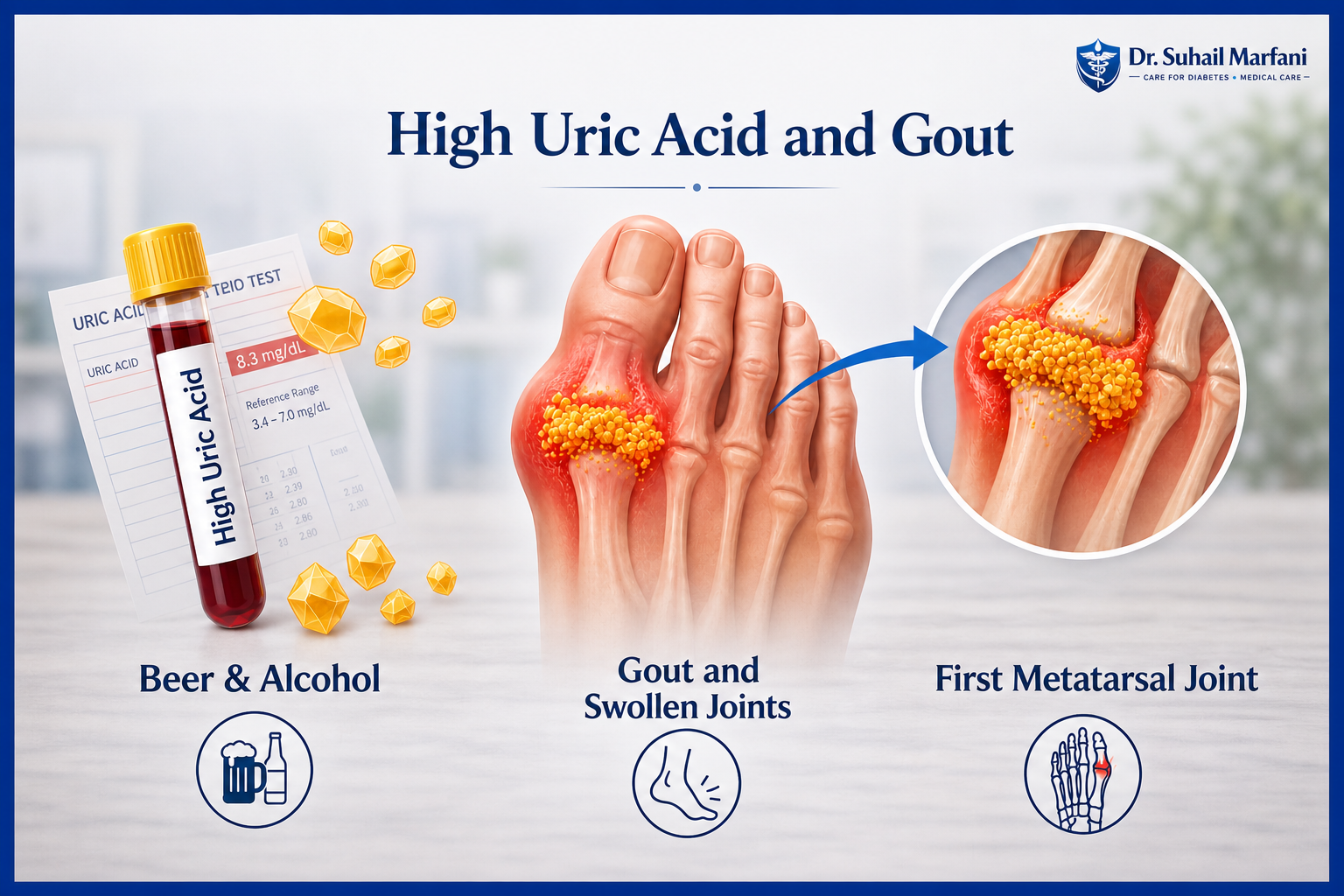
- Joint pain (especially in the big toe – gout)
- Swelling and redness of joints
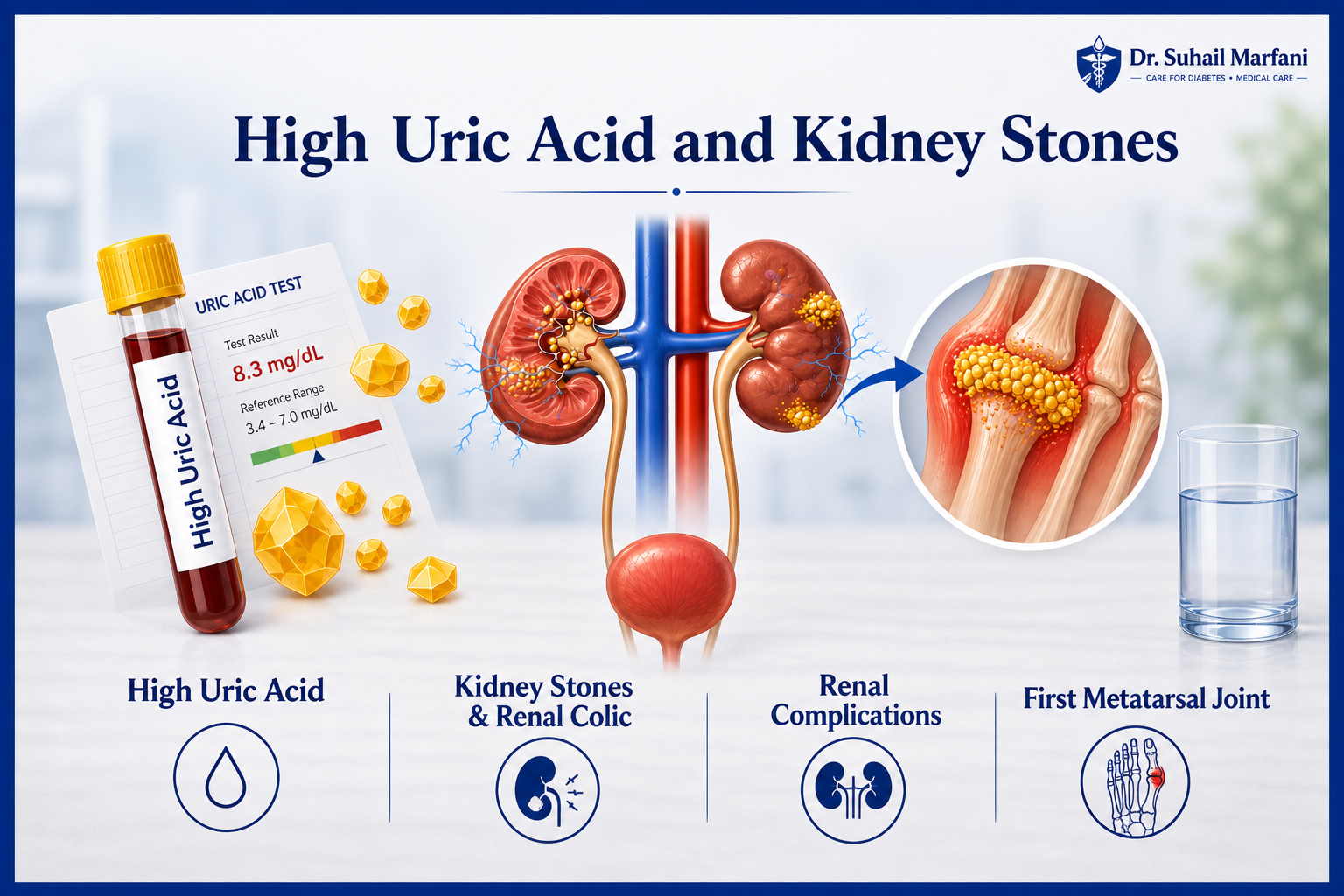
- Kidney stones (in some cases)
When to Check for High Uric Acid
- Recurrent joint pain or swelling
- Family history of gout
- Obesity or metabolic syndrome
- Kidney disease
- Use of certain medications
Early detection helps prevent complications.
Brief History (Development)
High uric acid develops due to increased production or decreased excretion of uric acid. Diet (red meat, seafood), alcohol intake, and metabolic conditions play important roles.
Management Plan
- Lifestyle Changes: Reduce purine-rich foods, limit alcohol, increase hydration
- Weight Control: Maintain healthy body weight
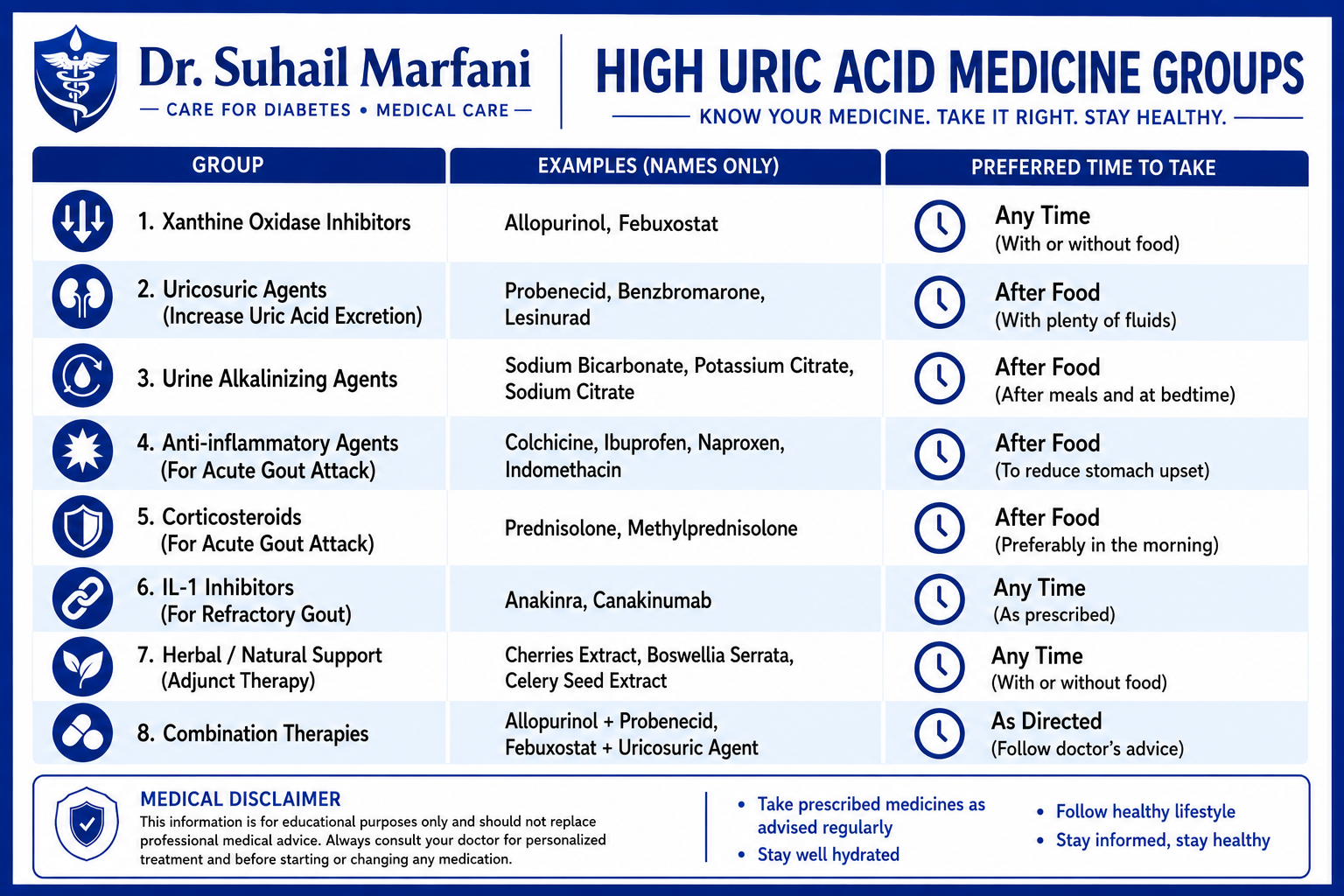
- Medications: Uric acid–lowering drugs when indicated
- Regular Follow-up
Complications of High Uric Acid
- Gout (painful arthritis)
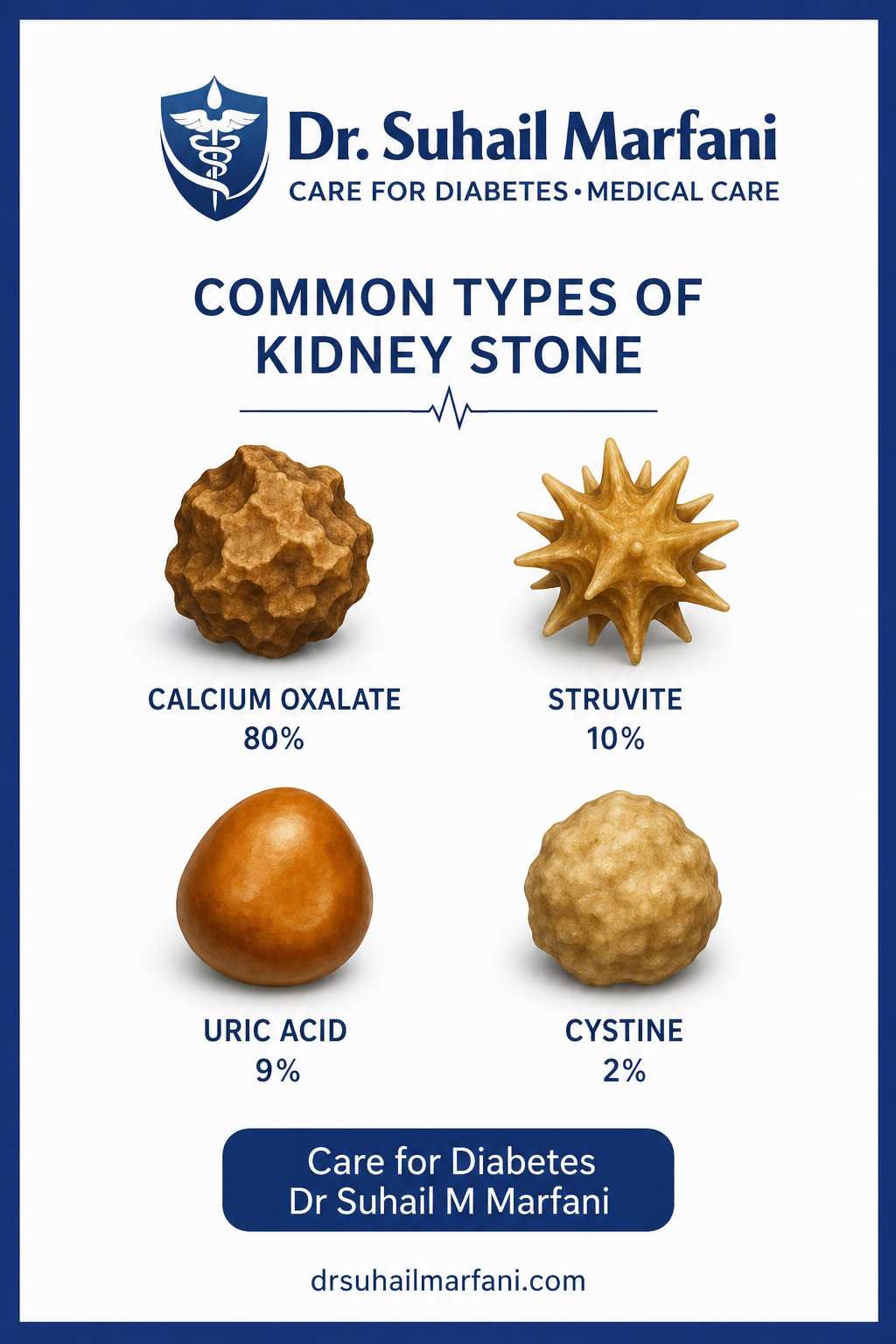
- Kidney stones
- Joint damage (chronic cases)
Monitoring
- Serum uric acid levels
- Kidney function tests
- Clinical symptom review
Uric Acid Levels (General Guide)
| Category | Uric Acid Level | Indicator |
|---|---|---|
| 🟢 Normal | 3.5 – 7.0 mg/dL | Healthy |
| 🟡 Mildly Elevated | 7 – 8 mg/dL | Monitor |
| 🟠 High | 8 – 10 mg/dL | Risk of gout |
| 🔴 Very High | >10 mg/dL | High risk |
| 🚨 Severe | Very high + symptoms | Needs urgent care |
Future and Advancements
- Better medications for uric acid control
- Personalized dietary management
- Early prevention strategies
- Integration with metabolic disease care
- **Looking For: High Uric Acid Doctor in Sharjah, Specialist doctor in Sharjah, High Uric Acid treatment in Sharjah, Internal Medicine Specialist Doctor in Sharjah, Doctor in Sharjah.
For Obesity info, visit:https://drsuhailmarfani.com/obesity/
Frequently Asked Questions About High Uric Acid
- What is high uric acid?
High uric acid occurs when the body produces too much uric acid or cannot remove it effectively.
- What causes high uric acid levels?
Causes include excessive consumption of red meat, seafood, sugary drinks, obesity, kidney disease, and genetics.
- What symptoms can high uric acid cause?
High uric acid may lead to gout, causing sudden joint pain, swelling, redness, and tenderness.
- What foods should be avoided with high uric acid?
Red meat, organ meats, certain seafood, sugary beverages, and excessive alcohol should be limited.
- Can high uric acid be treated?
Yes. Treatment includes dietary changes, increased water intake, weight management, and medications when necessary.
High Uric Acid Medicine Classes
Delivering evidence-based care and trusted medical education, with a focus on diabetes, chronic disease management, and preventive health. Simplifying complex medical information to empower informed patient decisions.
Menu
Contact Us
Email: support@drsuhailmarfani.com
Call 04 707 0999
Prime Medical Center – Al Qasimia
King Abdul Aziz Street, Al Nad, Sharjah, UAE