
Thyroid Disorders & Diet Plan
Thyroid disorders are conditions affecting the thyroid gland, which regulates metabolism through hormones. When the gland produces too much or too little hormone, it can affect many body systems.
Types of Thyroid Disorders
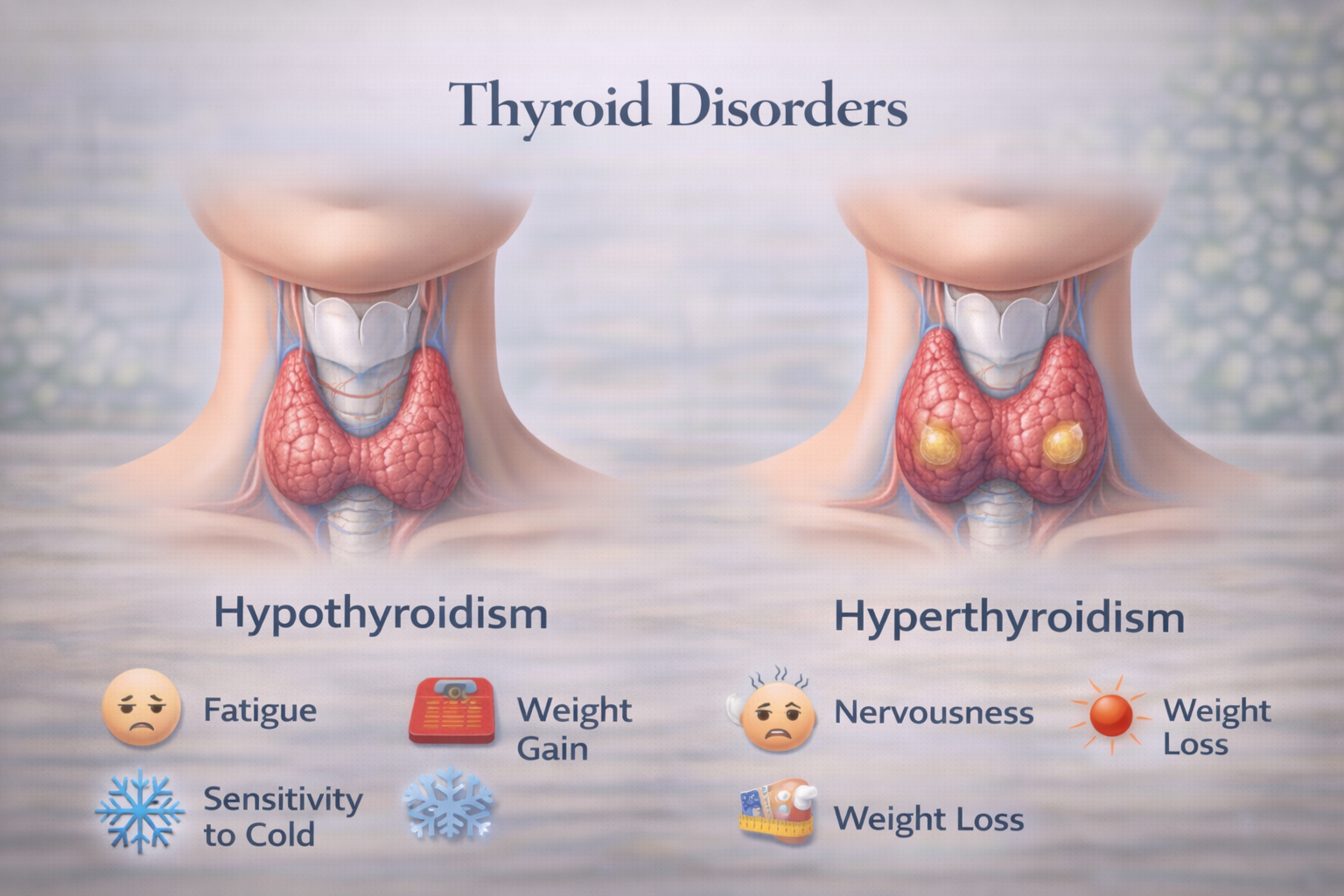
- Hypothyroidism: Low thyroid hormone levels (underactive thyroid)
- Hyperthyroidism: Excess thyroid hormone (overactive thyroid)
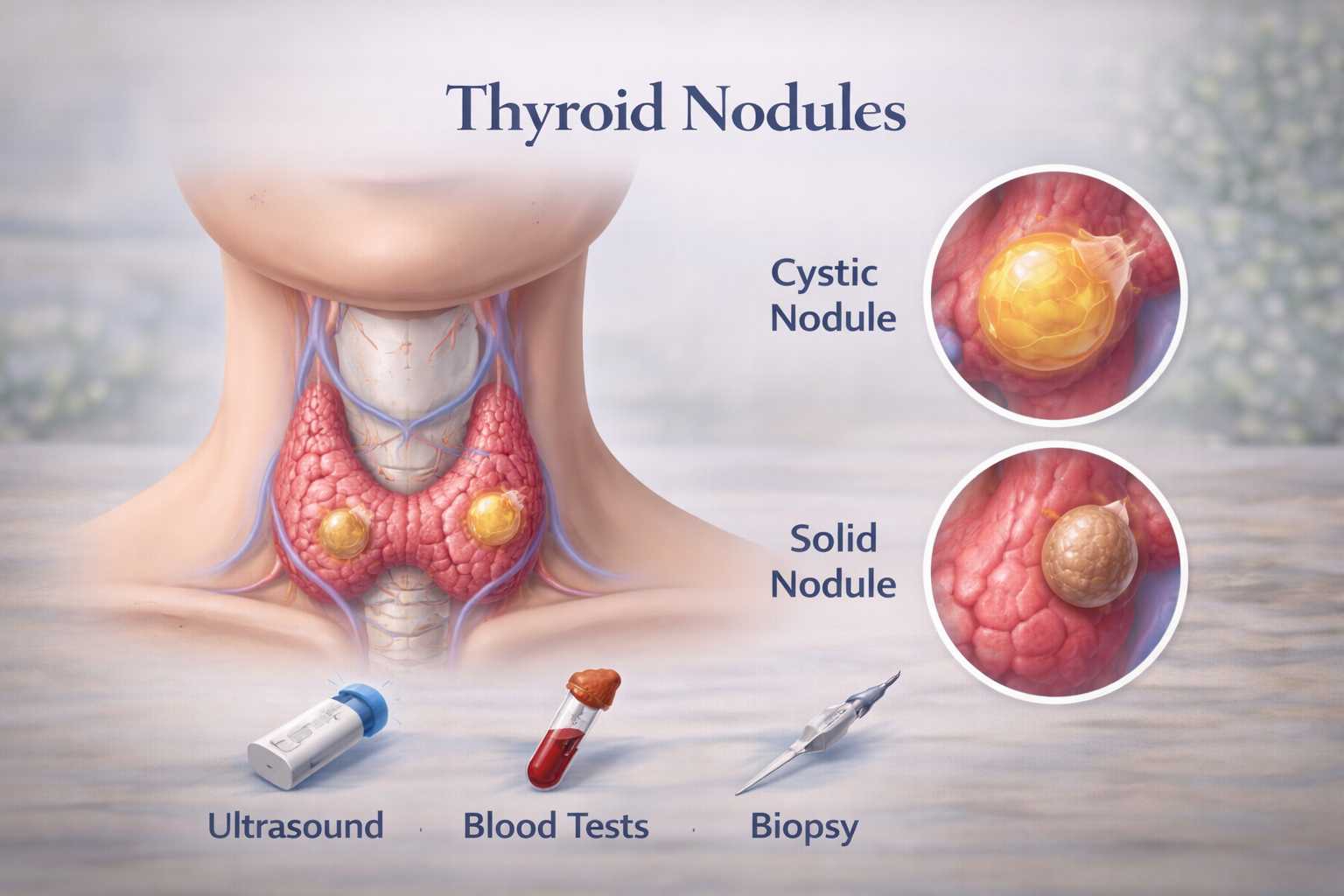
- Thyroid Nodules/Goiter: Enlargement or lumps in the thyroid
- Autoimmune Thyroid Disease: Such as Hashimoto’s thyroiditis or Graves’ disease
Clinical Features
Symptoms depend on the type:
Hypothyroidism:
- Fatigue
- Weight gain
- Cold intolerance
- Dry skin
Hyperthyroidism:
- Weight loss
- Palpitations
- Anxiety
- Heat intolerance
When to Check for Thyroid Disorders
- Unexplained weight changes
- Persistent fatigue
- Hair loss or skin changes
- Menstrual irregularities
- Family history of thyroid disease
Regular screening is helpful, especially in high-risk individuals.
Brief History (Development)
Thyroid disorders may develop gradually due to autoimmune causes, iodine imbalance, genetics, or other medical conditions. Many cases remain undiagnosed without proper testing.
Management Plan
- Medications: Thyroid hormone replacement or anti-thyroid drugs
- Lifestyle: Balanced diet and regular follow-up
- Treat Underlying Causes: Especially autoimmune conditions
- Specialist Care: When required
Complications of Thyroid Disorders
- Heart problems (especially with hyperthyroidism)
- Weight and metabolic issues
- Fertility problems
- Mood and cognitive changes
Monitoring
- Regular thyroid function tests (TSH, T3, T4)
- Clinical symptom assessment
- Dose adjustment based on results
Thyroid Function Levels (General Guide)
| Status | TSH Level | Indicator |
|---|---|---|
| 🟢 Normal | ~0.4 – 4.0 mIU/L | Balanced |
| 🟡 Mild Dysfunction | Slightly abnormal | Needs follow-up |
| 🟠 Hypothyroidism | High TSH | Underactive thyroid |
| 🔴 Hyperthyroidism | Low TSH | Overactive thyroid |
| 🚨 Severe Imbalance | Very high/low | Requires urgent care |
Future and Advancements
- Better awareness and early diagnosis
- More precise hormone testing
- Personalized treatment approaches
- Improved management of autoimmune thyroid diseases
- **Looking For: Thyroid Doctor in Sharjah, Specialist doctor in Sharjah, Thyroid Diseases Doctor in Sharjah, Hypothyroidism Doctor in Sharjah, Hyperthyroidism Doctor in Sharjah, Internal Medicine Specialist Doctor in Sharjah, Doctor in Sharjah.
- Frequently Asked Questions About Hypothyroidism
- What is hypothyroidism?
- Hypothyroidism occurs when the thyroid gland does not produce enough thyroid hormone.
- What are the common symptoms of hypothyroidism?
- Symptoms include fatigue, weight gain, constipation, dry skin, hair loss, and feeling cold.
- What causes hypothyroidism?
- Common causes include autoimmune thyroid disease, thyroid surgery, certain medications, and iodine deficiency.
- How is hypothyroidism diagnosed?
- Diagnosis is made through blood tests, particularly TSH and thyroid hormone levels.
- Can hypothyroidism be treated?
- Yes. Most patients respond well to thyroid hormone replacement therapy.
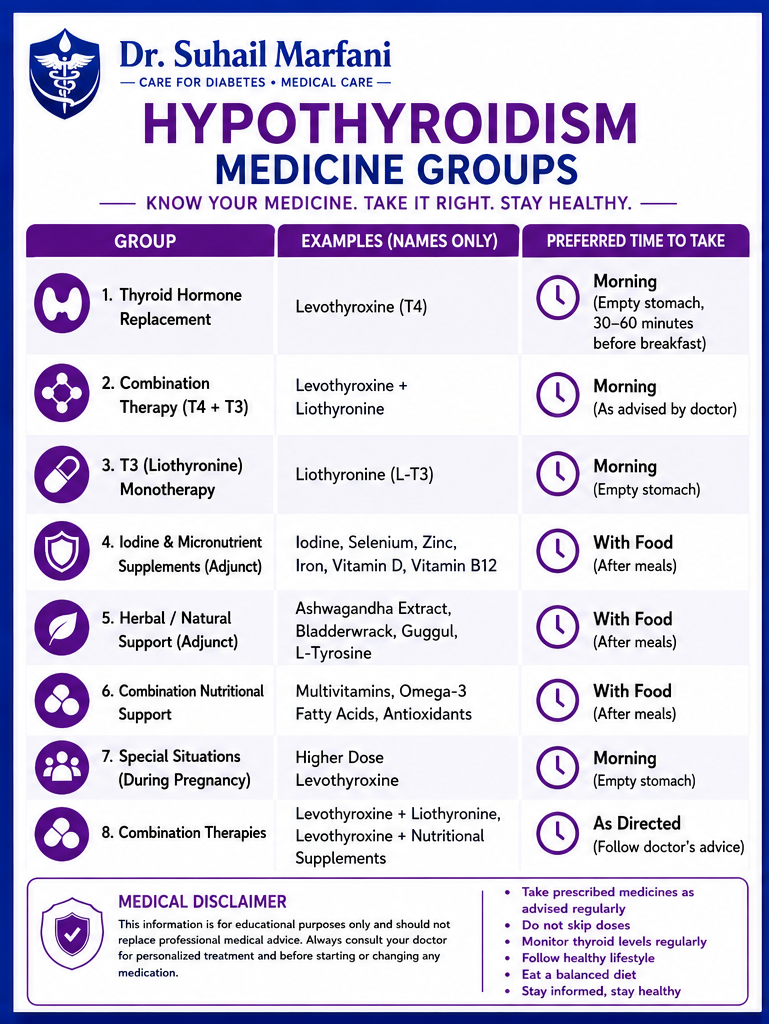
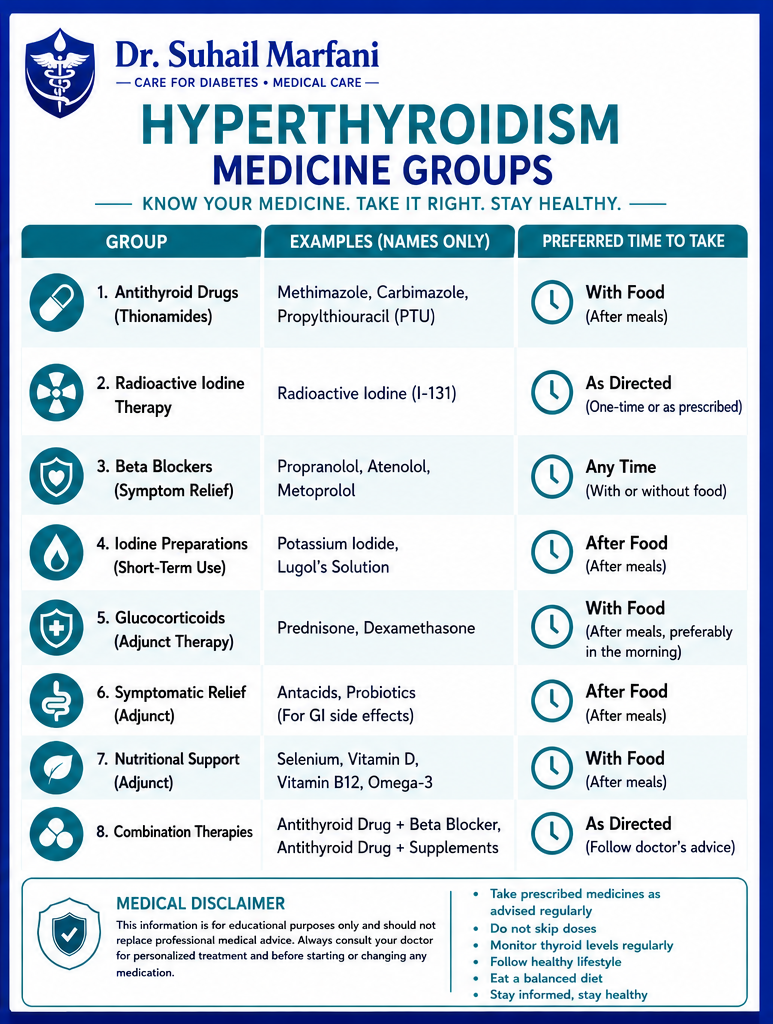
Thyroid Disorders Medicine Classes
Hypothyroidism
Hyperthyroidism
Delivering evidence-based care and trusted medical education, with a focus on diabetes, chronic disease management, and preventive health. Simplifying complex medical information to empower informed patient decisions.
Menu
Contact Us
Email: support@drsuhailmarfani.com
Call 04 707 0999
Prime Medical Center – Al Qasimia
King Abdul Aziz Street, Al Nad, Sharjah, UAE