
Hypoglycemia
(Low Blood Sugar)
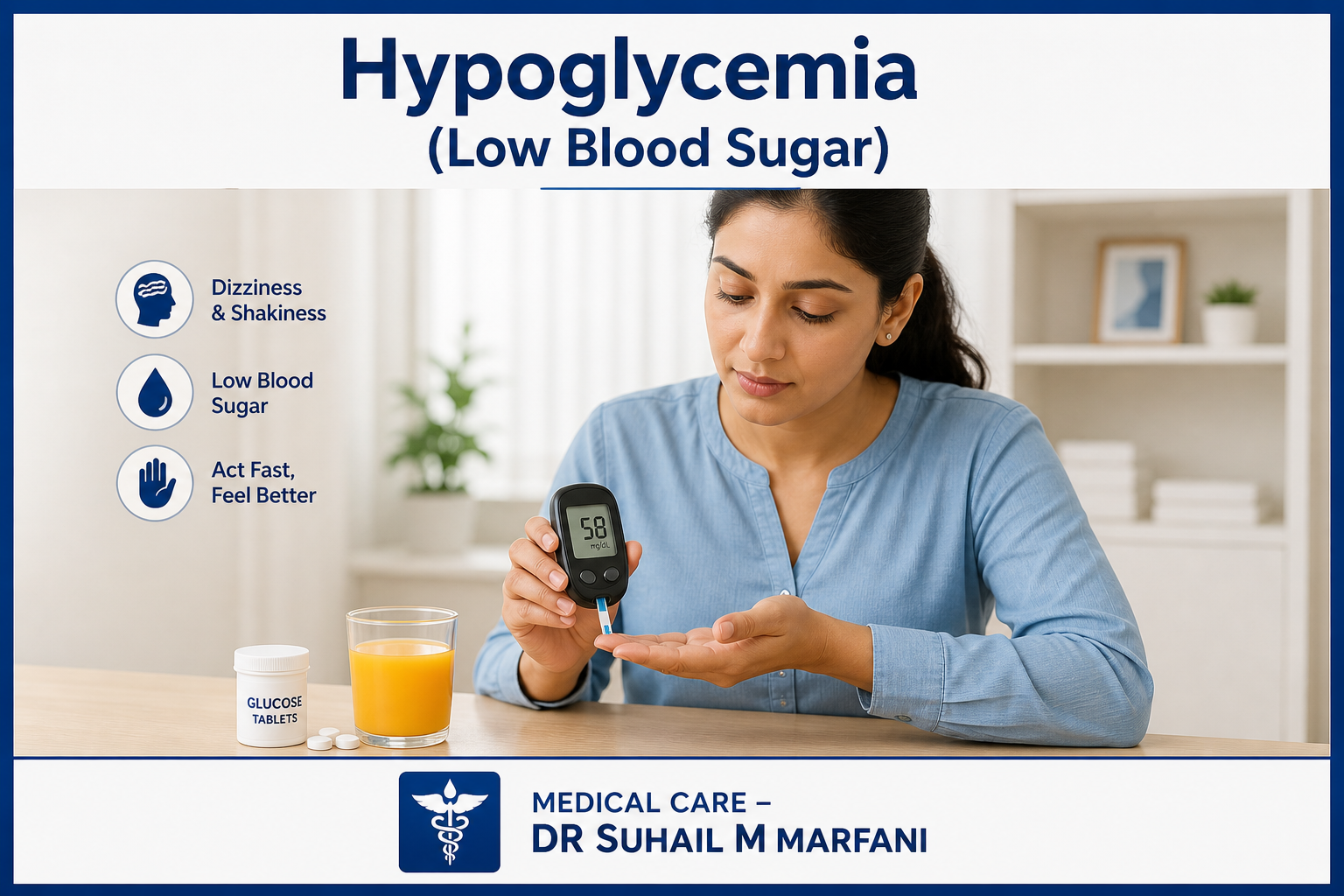
Hypoglycemia refers to a lower-than-normal blood glucose level, typically defined as <70 mg/dL (3.9 mmol/L). It is most commonly seen in people with diabetes on glucose-lowering therapy but can occur in non-diabetic individuals as well.
Causes
- Excess insulin or oral hypoglycemic medications
- Skipping or delaying meals
- Prolonged fasting
- Increased physical activity without adequate food intake
- Alcohol consumption (especially on an empty stomach)
- Critical illnesses (liver, kidney, or heart disease)
- Hormonal deficiencies (e.g., adrenal insufficiency)
Types
- Mild Hypoglycemia: Patient is alert and able to self-treat
- Moderate Hypoglycemia: More pronounced symptoms but still conscious
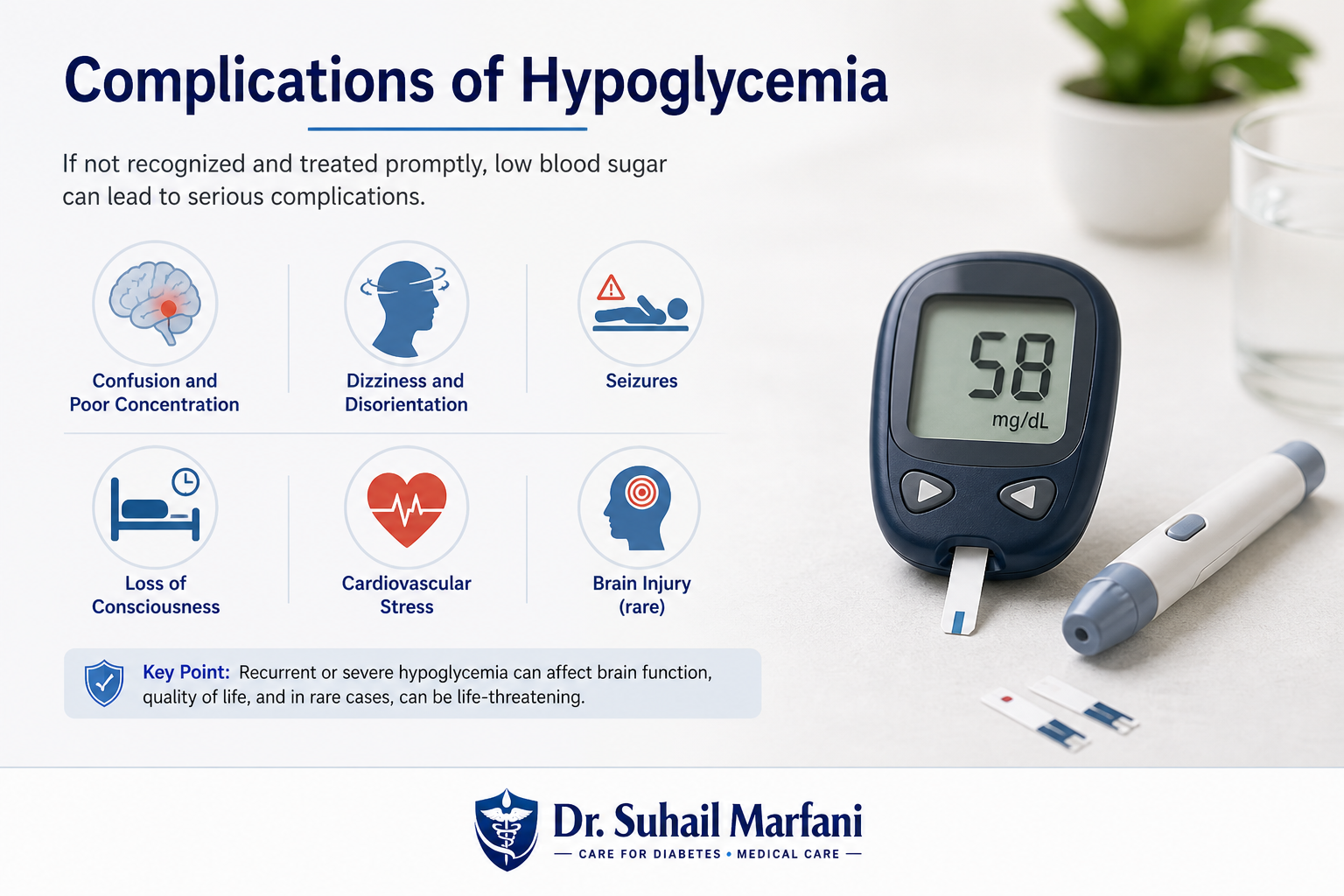
- Severe Hypoglycemia: Requires assistance; may involve confusion, seizures, or unconsciousness
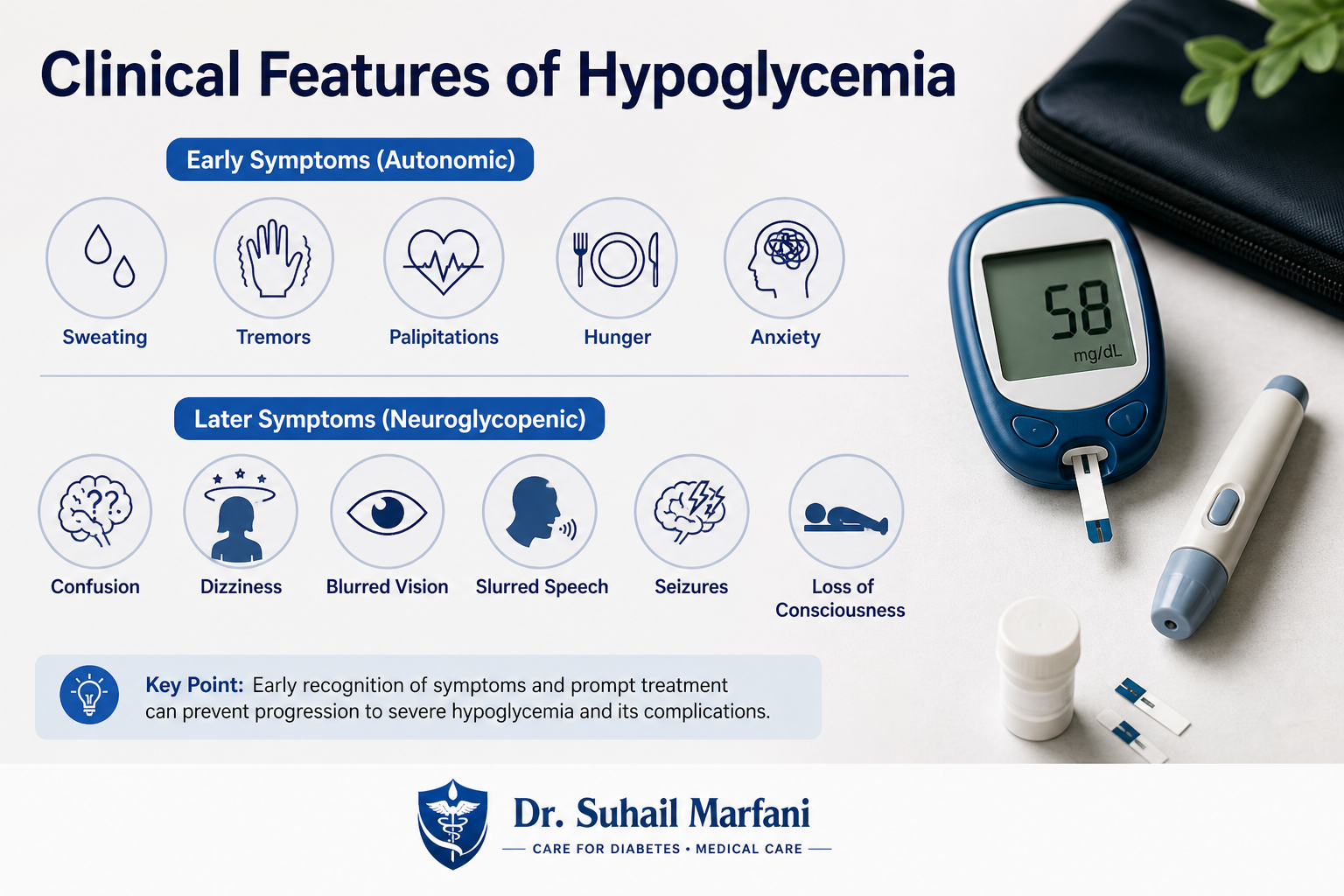
Clinical Features
Autonomic (early symptoms):
- Sweating
- Tremors
- Palpitations
- Hunger
- Anxiety
Neuroglycopenic (late symptoms):
- Confusion or difficulty concentrating
- Dizziness
- Blurred vision
- Slurred speech
- Seizures or loss of consciousness
Laboratory Findings
- Low plasma glucose (<70 mg/dL)
- In some cases: insulin, C-peptide, and cortisol levels may be evaluated
- HbA1c to assess overall glycemic control
Investigations
- Capillary blood glucose (glucometer): Immediate assessment
- Laboratory plasma glucose: Confirmation
- Continuous Glucose Monitoring (CGM): Detects recurrent episodes
- Further hormonal or metabolic workup in non-diabetic or unexplained cases
Management
- Immediate treatment (Rule of 15):
- This is only applicable for fully conscious patient
- Take 15 grams of fast-acting carbohydrates (e.g., glucose tablets, juice)
- Recheck glucose after 15 minutes and repeat if needed
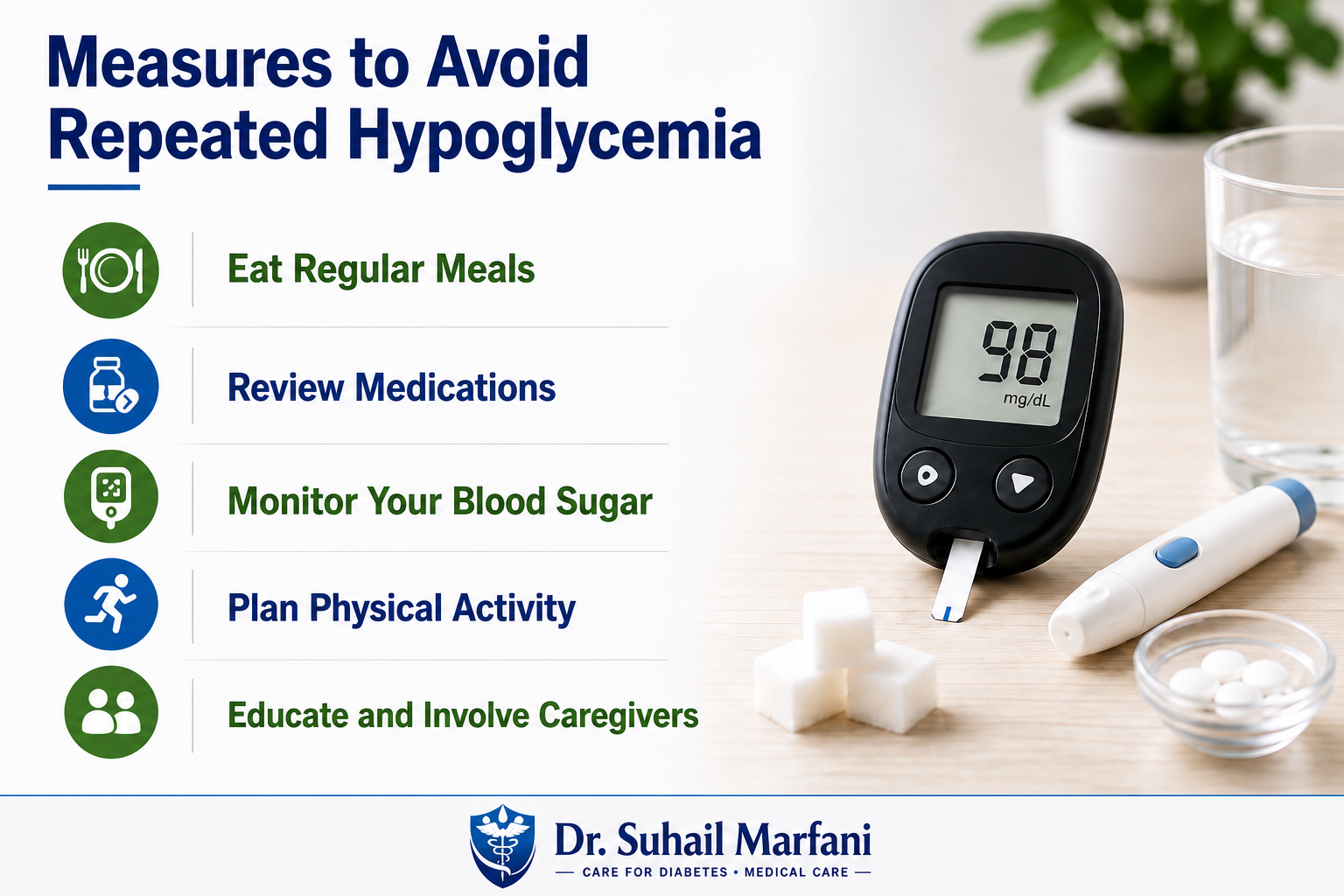
- Prevention:
- Regular meals and snacks
- Medication adjustment as needed
- Monitoring blood glucose regularly
- Patient education on early symptom recognition
Summary
Hypoglycemia is a common and potentially serious condition, especially in people with diabetes. Early recognition and prompt treatment are essential to prevent complications. Proper education, regular monitoring, and individualized treatment plans are key to prevention.
For info on thyroid, visit:https://drsuhailmarfani.com/thyroid-disorders/
Frequently Asked Questions (FAQs) About Prediabetes
1. What is prediabetes?
Prediabetes is a condition where blood sugar levels are higher than normal but not high enough to be diagnosed as diabetes. It is an early warning sign that you may develop Type 2 diabetes if preventive measures are not taken.
2. What are the symptoms of prediabetes?
Most people with prediabetes do not have any symptoms. Some may notice increased thirst, frequent urination, fatigue, or darkened skin in body folds (acanthosis nigricans).
3. Can prediabetes be reversed?
Yes. Prediabetes can often be reversed through healthy eating, regular physical activity, weight loss, and maintaining a healthy lifestyle.
4. Who is at risk of developing prediabetes?
Risk factors include being overweight, having a family history of diabetes, physical inactivity, high blood pressure, high cholesterol, and age over 45 years.
5. How is prediabetes diagnosed?
Prediabetes is diagnosed through blood tests such as:
- Fasting Blood Sugar: 100–125 mg/dL (5.6–6.9 mmol/L)
- HbA1c: 5.7%–6.4%
- Oral Glucose Tolerance Test (OGTT): 140–199 mg/dL after 2 hours
Delivering evidence-based care and trusted medical education, with a focus on diabetes, chronic disease management, and preventive health. Simplifying complex medical information to empower informed patient decisions.
Menu
Contact Us
Email: support@drsuhailmarfani.com
Call 04 707 0999
Prime Medical Center – Al Qasimia
King Abdul Aziz Street, Al Nad, Sharjah, UAE